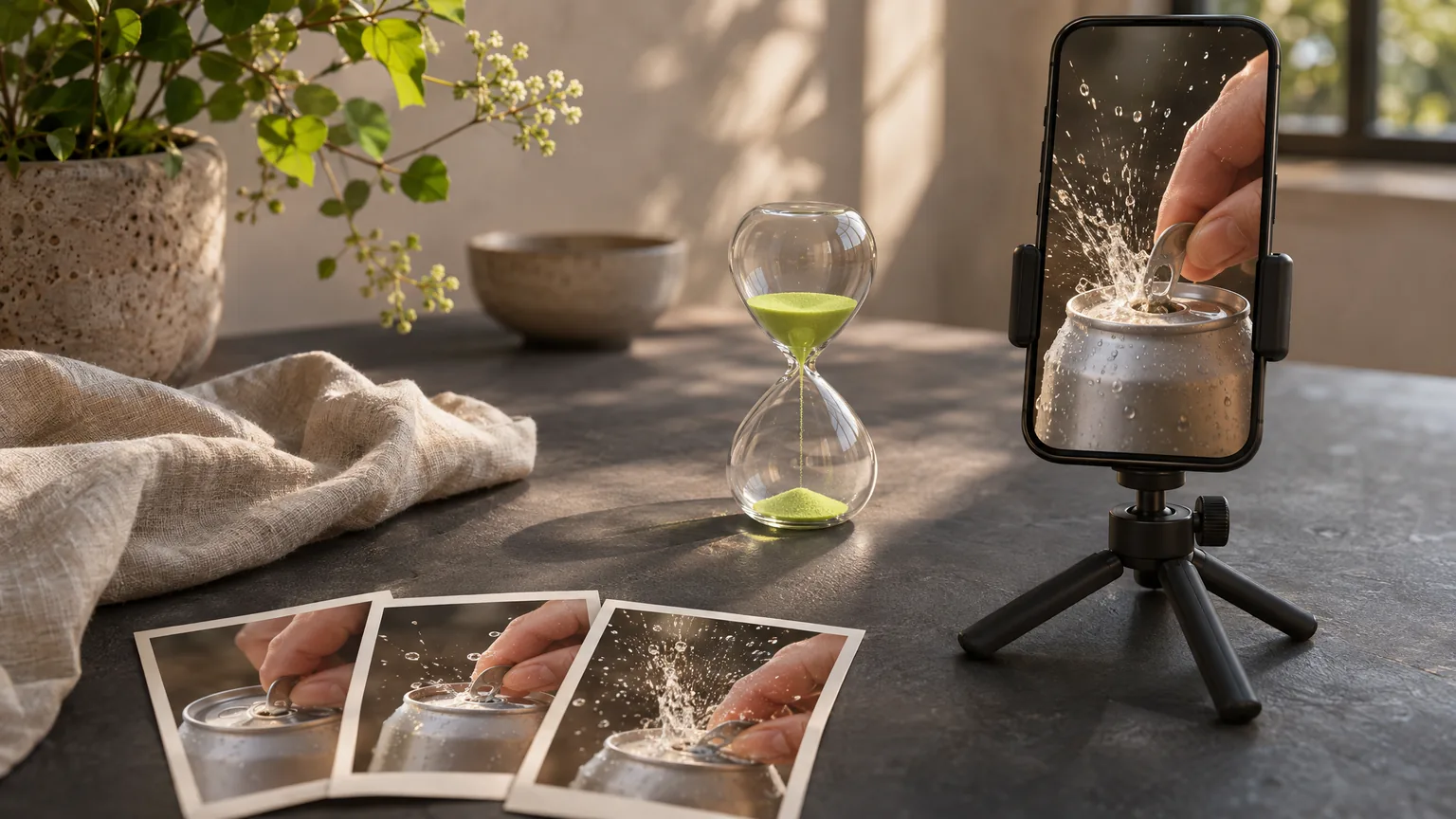
How to Clone a Winning Ad Without Copying It
Rebuild a winning ad's structure, hook and pacing with your own product, and leave its brand, footage, likeness and claims alone. A teardown template inside.
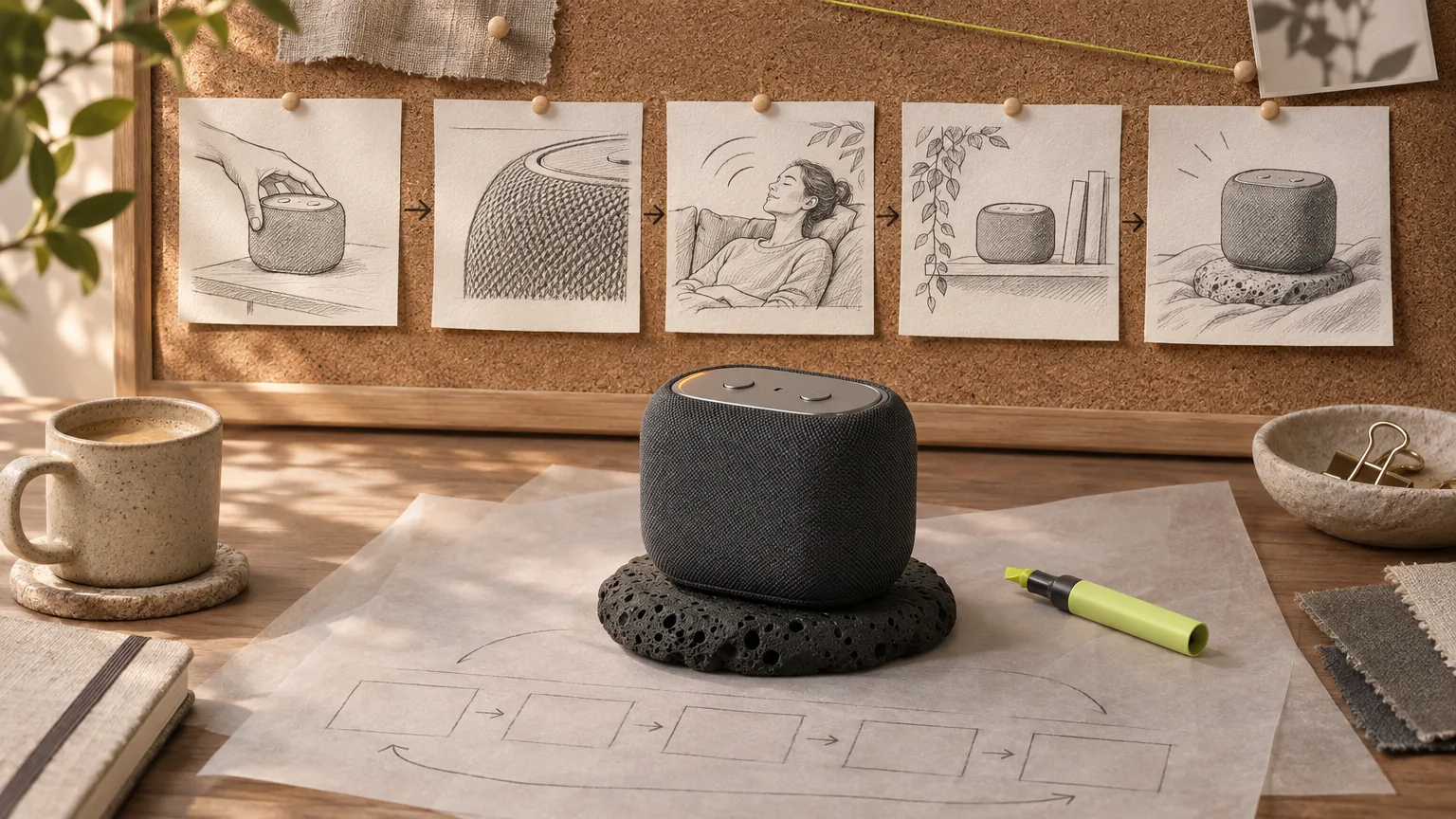
To clone a winning ad ethically, copy its structure — the hook type, shot order, pacing, proof format and offer framing — and rebuild every element with your own product, words and evidence. Do not copy its brand assets, footage, music, exact copy, a real person’s likeness or claims you cannot support. In practice that means writing a structural teardown of the ad, turning it into a scene description, and generating an original version from scratch.
In short:
- Ideas and formats are widely shared; specific expression, trademarks and likeness are not.
- Tear the ad down into time, shot, job and on-screen text before you make anything.
- Rebuild from a written scene description, not from the original footage.
- Re-check claims: a competitor’s claim is not evidence for your product.
- Compare the final side by side and change anything recognizable.
Why “cloning” a winning ad is normal — and where it goes wrong
Every performance team studies ads that seem to work: the unboxing that opens on the box, the problem-solution cut, the creator holding the product to the lens. Formats like these spread because they solve a real problem — stopping the scroll and showing the product fast. Reusing a format is how creative markets work.
It goes wrong when “inspired by” turns into “copied from.” Typical failures include re-uploading or tracing the original footage, reusing its voiceover script word for word, using the same music track, styling an AI presenter to look like the original creator, or repeating a claim the other brand can support and you cannot. Each of those can create copyright, trademark, publicity-right or advertising-law exposure, and platforms can reject ads for them.
What you can borrow and what you cannot
| Borrow (rebuild with your own product) | Do not copy |
|---|---|
| Hook type: question, bold result, problem, surprise | Exact headline, script or caption wording |
| Shot order and number of shots | The original footage, frames or edits |
| Pacing: cut rhythm, when the product appears | The music track or a sound-alike of it |
| Proof format: demo, close-up, comparison, reaction | Logos, packaging design, trademarks, brand colors used to imply affiliation |
| Offer framing: bundle, first-order offer, guarantee type | A real person’s face, voice or recognizable persona |
| Aspect ratio, length, caption style | Claims, numbers, awards or reviews that belong to someone else |
In general terms, copyright tends to protect specific expression rather than ideas or formats; trademark law protects brand identifiers; and publicity or likeness rights protect real people. Platform advertising policies add their own rules on top, and in Korea, the Act on Fair Labeling and Advertising (표시광고법) governs misleading claims. This is general information, not legal advice.
Step 1: Write a structure teardown
Need references first? Ad Finder shows competitor ads on Meta and TikTok, so you can pick the formats that keep appearing in your category. Watch the reference ad several times: once with sound, once muted, and once frame by frame through the opening. Fill in a teardown like this — describe what happens and why, never what the brand is.
| Time | Shot | Job | On-screen text (paraphrased function) |
|---|---|---|---|
| 0–1s | Close-up of the problem in a home setting | Stop the scroll | A question naming the problem |
| 1–3s | Product enters frame, held by a hand | Establish the subject | Product category, no claim |
| 3–6s | Product in use, single action | Prove the benefit visually | One short benefit line |
| 6–8s | Detail shot: texture or mechanism | Build desire | None |
| 8–10s | Product on clean surface with CTA | Convert | Call to action |
Note the pacing too: how many cuts, when the product first appears, whether the ad uses a face, and whether it relies on sound. That pattern — not the content — is what you are reusing.
Step 2: Replace every brand-specific element
Go through the teardown row by row and swap in your own material:
- Product: your actual product, from your own reference photos.
- Problem: a problem your product genuinely solves, phrased in your voice.
- Proof: a demonstration you can stand behind. If the original shows a result you cannot prove, choose a different proof format.
- Words: write new hooks. A useful exercise is to write three hooks of the same type — for example three different questions — without reusing any phrase.
- People: if the format uses a presenter, use a generic AI presenter or a creator you have rights to. Never style someone to resemble the original creator or a celebrity.
- Sound: music you have rights to, or a platform’s commercial library.
Step 3: Rebuild it in Cut Marketing from a written scene
Cut Marketing (Cutma) rebuilds the structure with your product and keeps the original footage out of the result. For your own ads it can even write the teardown for you.
- Video concept from the teardown. Open Video Cloning. If the reference is a video you own or have rights to (your own past winner, say), upload it: Cut Marketing finds the cuts, describes each shot’s framing, camera, action and on-screen text, and turns them into motion directions for your product without the original text, brands or people’s identities. For a competitor’s ad, describe the scene in plain language using your teardown rows instead. Then generate an original version. Its default model is Kling 4.0 (28 credits per second at 720p, its lowest quality, so a 5-second concept is 140 credits).
- Short-form variants. For quick social tests of the same structure, use Product Shorts or Product Video with your product image as the reference. Product Shorts defaults to Wan 3.0 (14 credits per second at 720p, or 70 credits for a 5-second variant); Product Video defaults to Seedance 2.5 (20 credits per second at 480p).
- Presenter formats. If the structure depends on a person holding the product, try UGC Product Video with a fictional AI presenter from the filterable library, or your own presenter photo, so nobody resembles the original creator. Its default Seedance 2.5 model costs 20 credits per second at 480p, so a 5-second draft is 100 credits ($1.00).
- Static versions. For a winning image layout, use Reference Images with a reference that is yours or licensed, plus a brief describing layout, lighting and composition. Generate without text, then add exact copy as real type with the compose feature described in adding exact ad copy to AI images.
- Your own words and sound. Finish the Ad in the studio joins the clips and adds auto captions in 40 styles, your exact hook, price and CTA text, AI narration from your script and free CC0 music, then exports 9:16, 1:1 and 4:5 at once. That fills the Words and Sound rows of your teardown with material you are free to use.
Generate a few variants at the lowest useful quality first. The cheapest video drafts start at 32 credits ($0.32) for an 8-second Veo 3.1 Fast clip at 720p or 1080p and 40 credits ($0.40) for a 5-second Seedance 2.0 Fast clip at 480p, on plans from $9 a month. The studio shows the exact credit cost before every run, and failed jobs release their reserved credits. For a fuller look at structures worth testing, see AI product ad formats.
Step 4: Review for resemblance and claims
Before anything goes live, run two reviews.
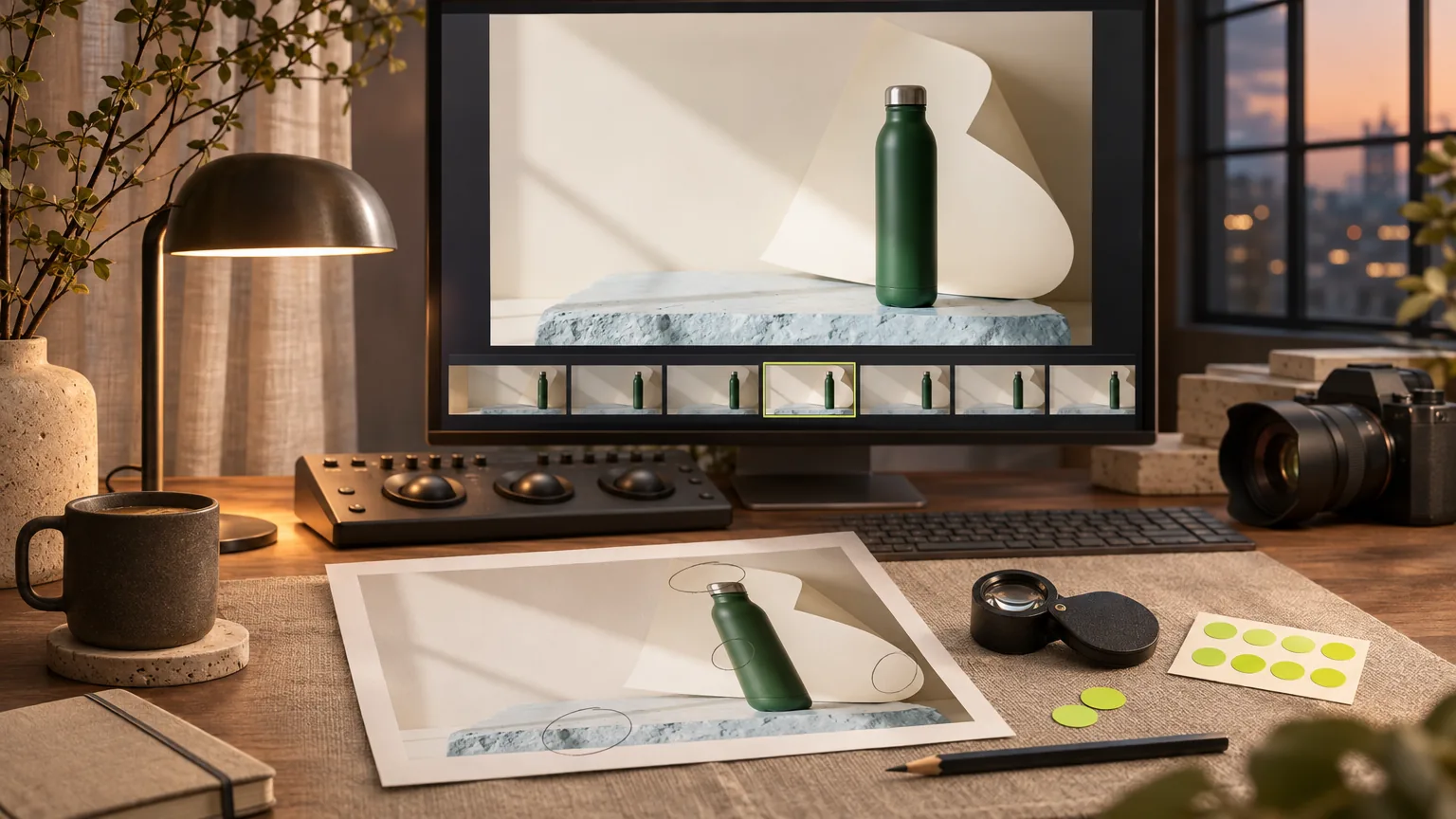
Resemblance review. Put the original and your version side by side, muted. Ask a colleague who has not seen either which brand each belongs to. If any frame, line or person is recognizable from the original, change it.
Claims review. List every claim your ad makes, stated or implied by the visuals. Each one needs evidence for your product. A competitor’s “lasts all day” is not your evidence. See how to review an AI product video for a full pre-export check.
Ethical cloning checklist
- The teardown describes structure and jobs, not brand content.
- No original footage, frames, music or voiceover is reused.
- All copy is newly written; no phrase is lifted from the original.
- No logos, packaging or brand cues that imply affiliation.
- No presenter styled to resemble a real creator or celebrity.
- Every claim is supported for your own product.
- Reference images used for stills are yours or licensed.
- The side-by-side muted comparison shows a clearly different ad.
- The ad complies with the platform’s current advertising policies.
Turn the structure into a test
A reused structure is still a hypothesis. Run your version against your current best ad with one variable changed — usually the hook — and read the result in context. The creative testing workflow shows how to keep the brief, approvals and observed results connected, and Meta ad creative testing in 2026 covers variant counts and naming.
FAQ
Is it legal to copy a competitor’s ad?
Copying the actual footage, music, wording, logos or a real person’s likeness can infringe rights. Learning from the general structure, hook type and pacing is a common way to study the market. This is general information, not legal advice, so check with counsel for borderline cases.
Can Cut Marketing clone a reference video directly?
It rebuilds the structure, never the footage. Upload a reference video you own or have rights to, and Video Cloning finds its shots, describes each one and turns them into directions that rebuild the same structure with your product, leaving out text, brands and people’s identities. For a competitor’s ad you do not own, describe the scene from your teardown instead.
What should I copy from a winning ad?
Copy the job of each moment: the hook type, shot order, pacing, proof format, offer framing and aspect ratio. Rebuild every one of those with your own product, wording and claims.
Can I use a reference image to guide a product still?
Yes, with Reference Images, as long as the reference is yours or licensed for that use. Use it for layout, lighting and composition, and keep other brands’ products, logos and people out of the result.
How do I know my version is different enough?
Put both ads side by side with the sound off. If a viewer could mistake yours for the original brand, or recognize a specific shot, line or person, change it.
Rebuild your first structure
Pick one ad you keep seeing in your category, write its teardown, and turn it into a scene description. Then open Video Cloning in the workspace and generate an original version with your product (or upload your own past winner and let it find the shots). New accounts receive 30 one-time trial credits on Google sign-in, enough to try the image tools but not a full video render; see pricing for credit costs per second and per image.